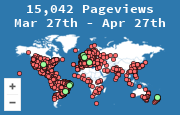
-
2491
-
1139
-
1028
-
982
-
935
About the Journal
Revista de Pesquisa Cuidado é Fundamental
RPCFO is a peer reviewed scientific journal edited by the Graduate Programs in Nursing - of the Alfredo Pinto School of Nursing of the Federal University of the State of Rio de Janeiro. These teaching units are hosted by the Alfredo Pinto School of Nursing of the Federal University of the State of Rio de Janeiro - UNIRIO. The aim of the journal is to disseminate scientific knowledge produced in the specific field of nursing sciences, with an interdisciplinary approach encompassing education, life sciences, and health sciences. Its mission is to disseminate the Science of Nursing and Health. It accepts manuscripts in Portuguese, English and Spanish. It is published only in the electronic version through issues in continuous flow and thematic issues. RPCFO's mission is to divulge Nursing and Health Science. It accepts manuscripts in Portuguese, English and Spanish. It is published only in the electronic version by means of continuous flow fascicles and thematic issues.
Manuscripts written in Portuguese or Spanish must be translated into English in their final version, since the RPCFO publishes its articles in English and Portuguese.
Manuscripts should be submitted exclusively to the RPCFO. Simultaneous submission to other journal(s) is not allowed.
Statement on Research Ethics and Integrity
In order to be published, the RPCFO considers it a sine qua non condition that submitted manuscripts must comply with the ethical-legal guidelines involving the elaboration of academic and/or technical-scientific works and research with human beings or animals.
In the case of research involving human beings, and in compliance with the provisions of Resolution CNS No. 466/2012 (http://aplicacao.saude.gov.br/plataformabrasil/login.jsf), the author(s) must mention in the manuscript the approval of the project by an Ethics Committee recognized by the National Research Ethics Committee of the National Health Council (CONEP-CNS), or by an equivalent body, when it has been carried out in another country.
RPCFO adopts the requirement of the World Health Organization and the International Committee of Medical Journal Editors for prior registration of clinical trials (randomized experimental studies) on a platform that meets the criteria elaborated by these two organizations (Brazilian Registry of Clinical Trials - REBEC (http://www.ensaiosclinicos.gov.br/)
Experimental research involving animals must comply with Law No. 11794 of October 8, 2008, which regulates item VII of Paragraph 1 of Art. 225 of the Federal Constitution, establishing procedures for the scientific use of animals; and the standards established in the Guide for the Care and Use of Laboratory Animals (Institute of Laboratory Animal Resources, National Academy of Sciences, Washington, D.C., United States), 1996, and in the Ethical Principles for Animal Experimentation (Colégio Brasileiro de Experimentação Animal - COBEA, available at: www.cobea.org.br), 1991. This information should be included in the method according to the ARRIVE recommendation (https://www.nc3rs.org.uk/arrive-guidelines).
The RPCFO supports the Recommendations for the Conduct, Reporting, Editing, and Publication of Scholarly Work in Medical Journals of the International Committee of Medical Journal Editors. These recommendations, regarding integrity and ethical standards in conducting and reporting research, are available at the URL http://www.icmje.org/urm_main.html.
It also supports the international standards for responsible research publication developed by COPE (Committee on Publication Ethics) for editors and authors (available at: http://publicationethics.org/international-standards-editors-and-authors)
Concepts, ideas or opinions expressed in the manuscripts, as well as the origin and accuracy of the citations contained therein, are the sole responsibility of the author(s).
RPCFO adopts the Ithenticate system for identifying plagiarism. Practices that harm scientific integrity such as plagiarism and self-plagiarism will be taken for evaluation by the Editorial Board for decision on penalties such as: suspension from publishing in the journal for a period determined by the Editorial Board. The authors will be immediately informed of all the steps of this process.
CATEGORIES OF MANUSCRIPTS
Types of articles considered Original research articles, Systematic reviews and Integrative literature reviews.
It has a continuous flow periodicity and uses the Creative Commons license CC BY NC ND.
e-ISSN: 2175-53-61 | Creation Year: 1997 | Knowledge Area: Nursing | Level: A4 (Nursing)
Relevance and Uniqueness of the Journal for National Scientific and Technological Development
The Journal of Research Cuidado é Fundamental Online plays a crucial role in the national landscape by significantly contributing to the scientific and technological advancement in the field of health care. Its relevance and uniqueness are highlighted through several key aspects:
1. Focus on Fundamental Care: The journal's emphasis on fundamental care in health ensures that it addresses essential aspects of nursing and healthcare practices. This focus is vital for improving patient outcomes, enhancing care quality, and supporting the professional development of health practitioners across the country.
2. Platform for Original Research: By prioritizing the publication of original research, the journal serves as a primary source for the latest findings and innovations in the health field. This not only advances scientific knowledge but also provides evidence-based insights that can be directly applied in clinical and administrative settings.
3. Interdisciplinary Approach: The journal encourages interdisciplinary research, integrating various fields such as nursing, medicine, psychology, and physiotherapy. This approach fosters a comprehensive understanding of health issues, promoting holistic and innovative solutions to complex problems.
4. Accessibility and Open Access: Committed to the principles of open access, the journal ensures that all published content is freely available to the public. This democratization of knowledge promotes wider dissemination of scientific discoveries, making them accessible to a broader audience, including practitioners, researchers, and policymakers.
5. Contribution to Professional Development: The journal serves as an educational resource for health professionals, providing up-to-date information that supports continuous learning and professional growth. This contributes to the enhancement of healthcare practices and the overall development of the health sector.
6. Ethical Standards and Quality: By adhering to rigorous ethical standards and a robust peer review process, the journal ensures the publication of high-quality, credible research. This integrity builds trust within the scientific community and among practitioners, reinforcing the journal's status as a reliable source of knowledge.
Current Issue
Vol. 18 (2026)
V.18 (jan/dez) 2026
Published:
2026-01-01
Editorial
Original article
Systematic Review of Literature
Integrative Review of the Literature
Revisão Integrativa de Literatura
Scope Review
Support